
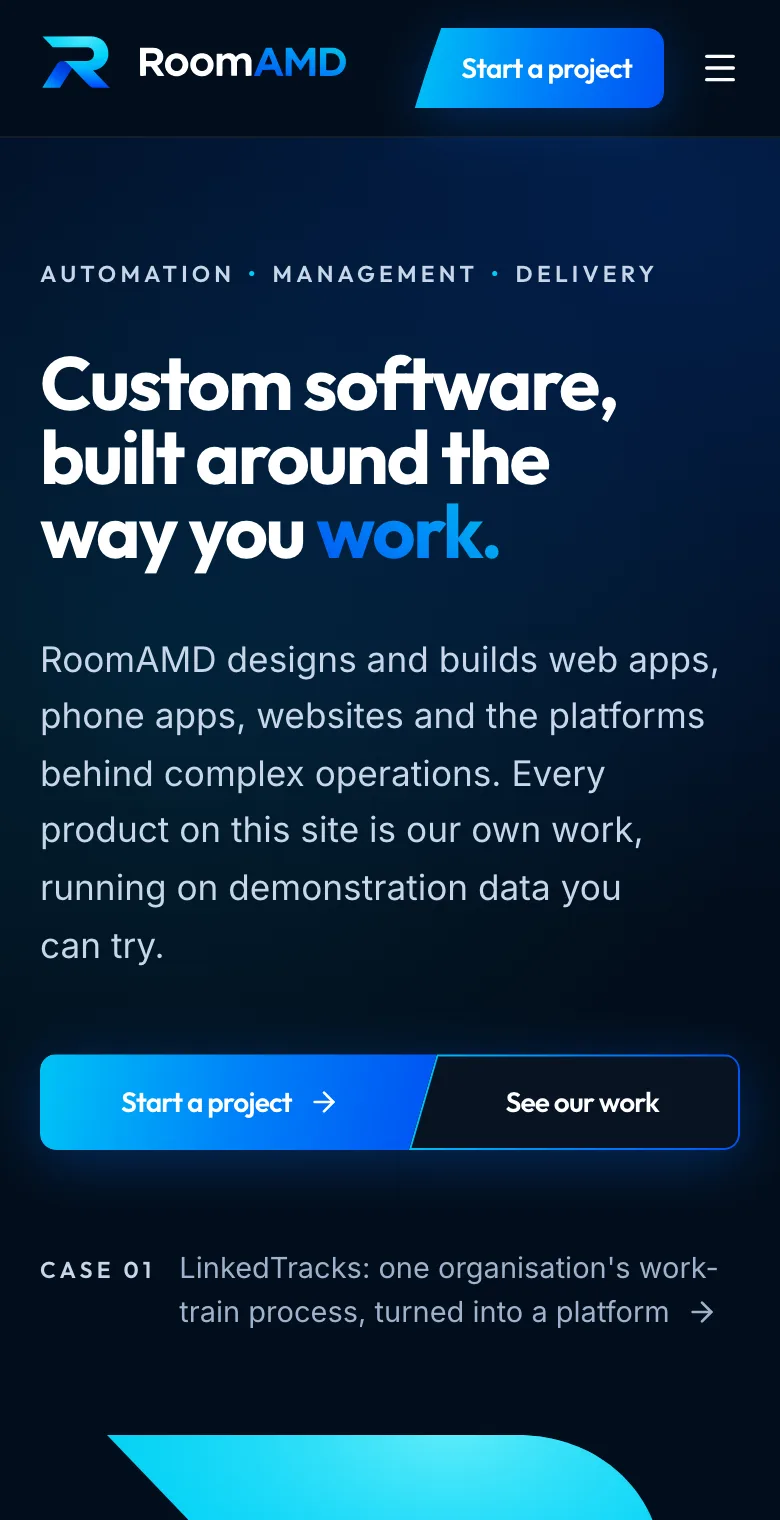
Automation•Management•Delivery
Custom software, built around the way you work.
For more than five years, RoomAMD has designed and built websites, components and custom products for businesses across the GTA. Now we build the web apps, phone apps and platforms that help companies automate, manage and grow.
Case 01LinkedTracks: one organisation's work-train process, turned into a platformWhat we build
One studio. Five kinds of software.
Web apps
Browser software for teams: records, rules, approvals and dashboards.
Phone apps
Apps for people away from a desk. LinkedTracks has one for crews and operators.
Websites
Fast, accessible sites, built for businesses across the GTA for more than five years. You are on one.
Built by RoomAMDOur own site
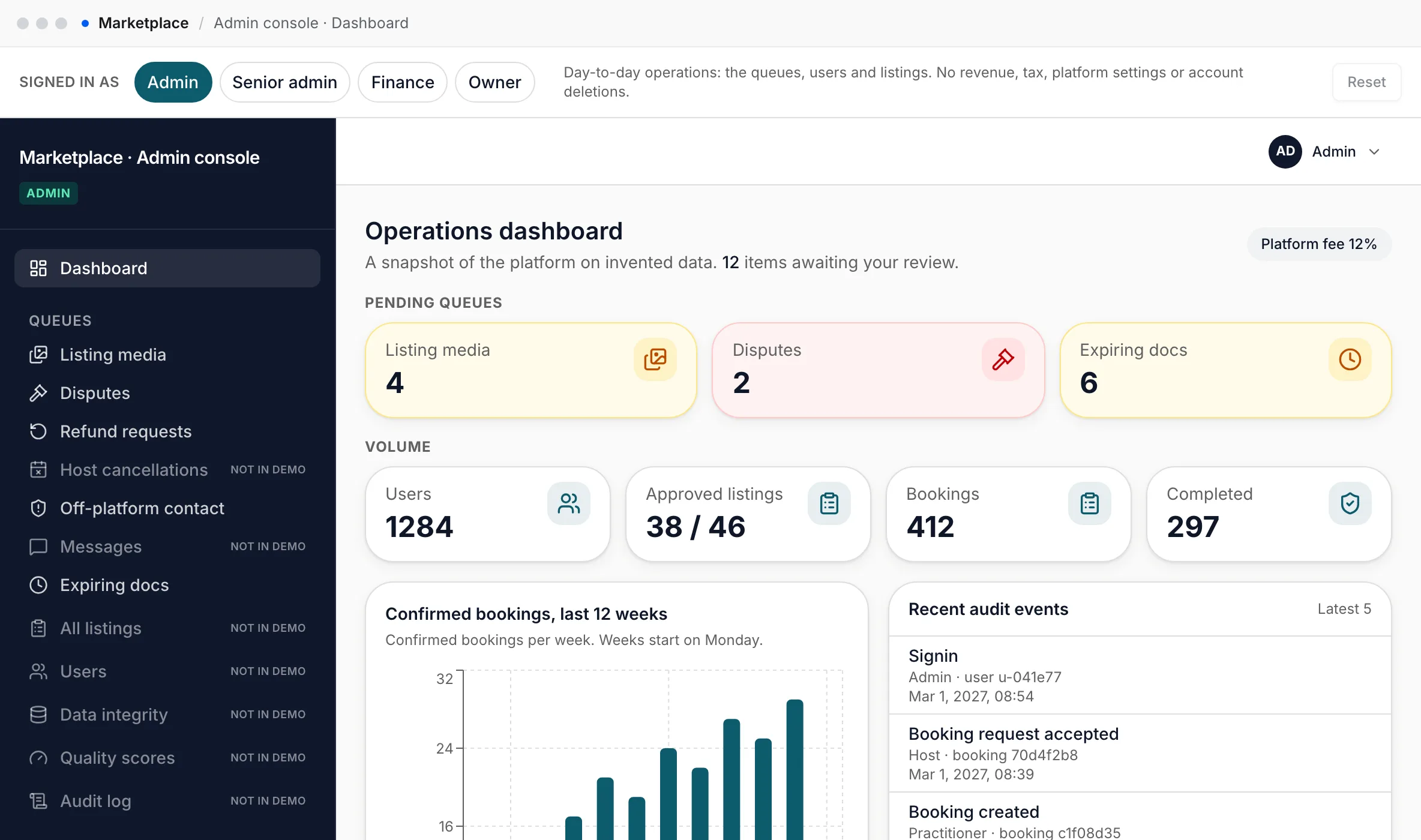
Internal tools
Consoles for the people who run the operation. The marketplace has one, with tiered staff authority.
Platforms
Many users, many roles, one set of records. LinkedTracks and the marketplace are both.
Below: one platform we built, opened up into the products that came out of it.
RoomAMD Identity
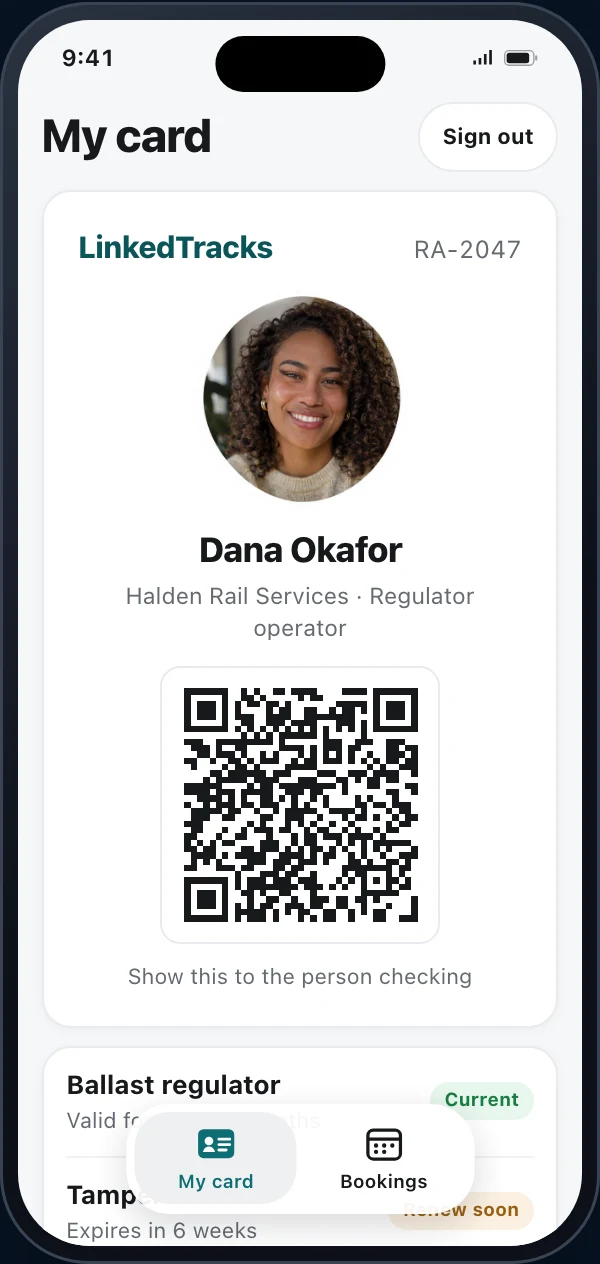
One card. Every qualification behind it.
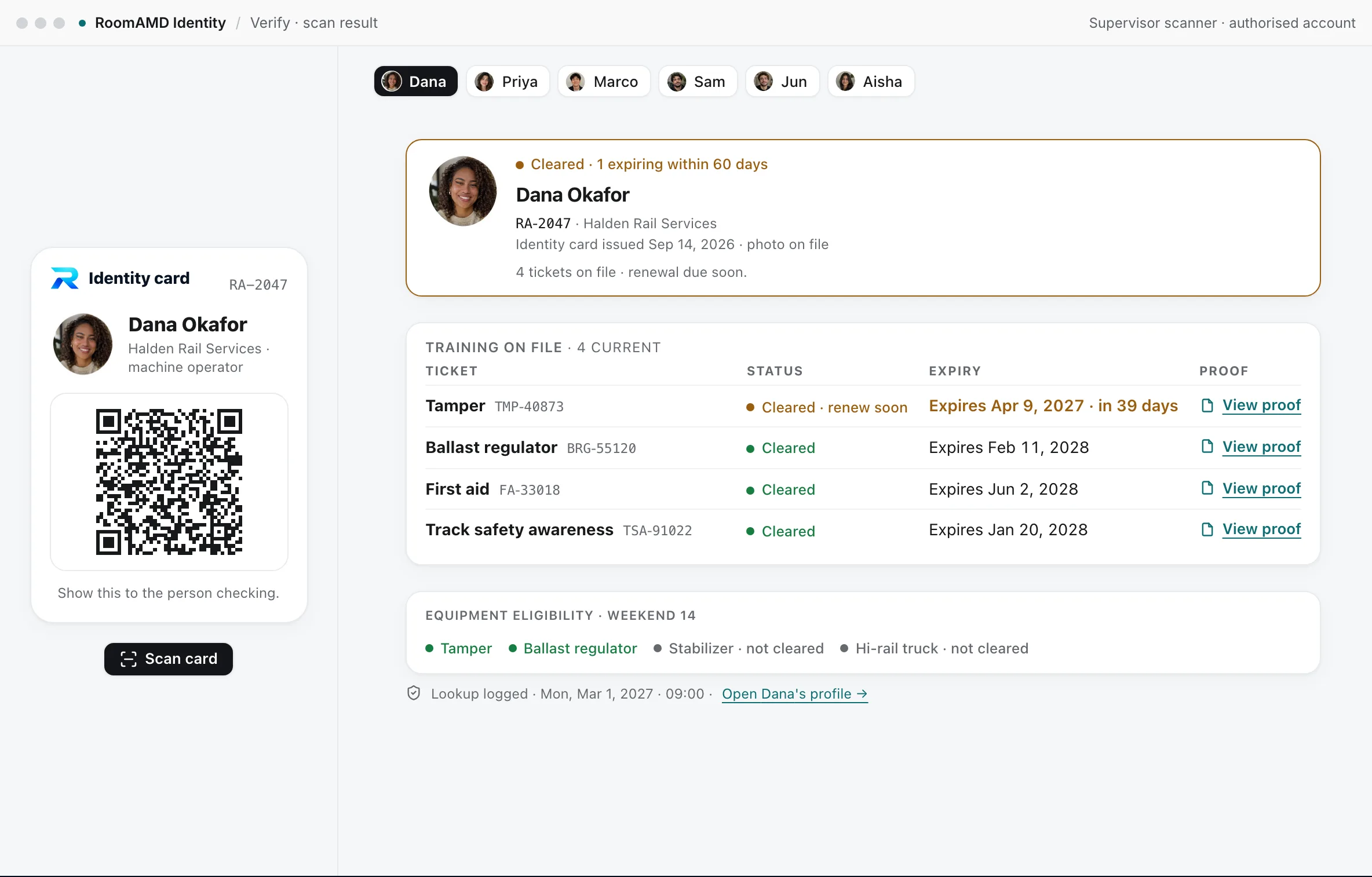
A digital identity card for every worker, backed by a live register of training, certificates and expiry dates. Scan it and you get one answer first: cleared, or not.
The card carries the person, not the paperwork.
Name, photo, ID and a QR code. Nothing printed on it can go out of date, and a lost card gives nothing away.
The card carries the person, not the paperwork.
Name, photo, ID and a QR code. Nothing printed on it can go out of date, and a lost card gives nothing away.
An authorised scan checks the live register.
Only people with scanning rights get a result. Every lookup is recorded with who scanned and when.
The verdict comes first, then the detail.
Cleared, renew soon, or not cleared. Then every record with its expiry, and what the person may operate. Switch workers to compare.
A cleared worker is one part of a ready site.
Explore RoomAMD IdentityRoomAMD Workforce
Know who is on site, what they're trained on, and what they're allowed to operate.
One list of employees and contractors with their assignments, their answers and their qualifications, plus a check-in kiosk at the gate that turns away anyone who isn't cleared to work.
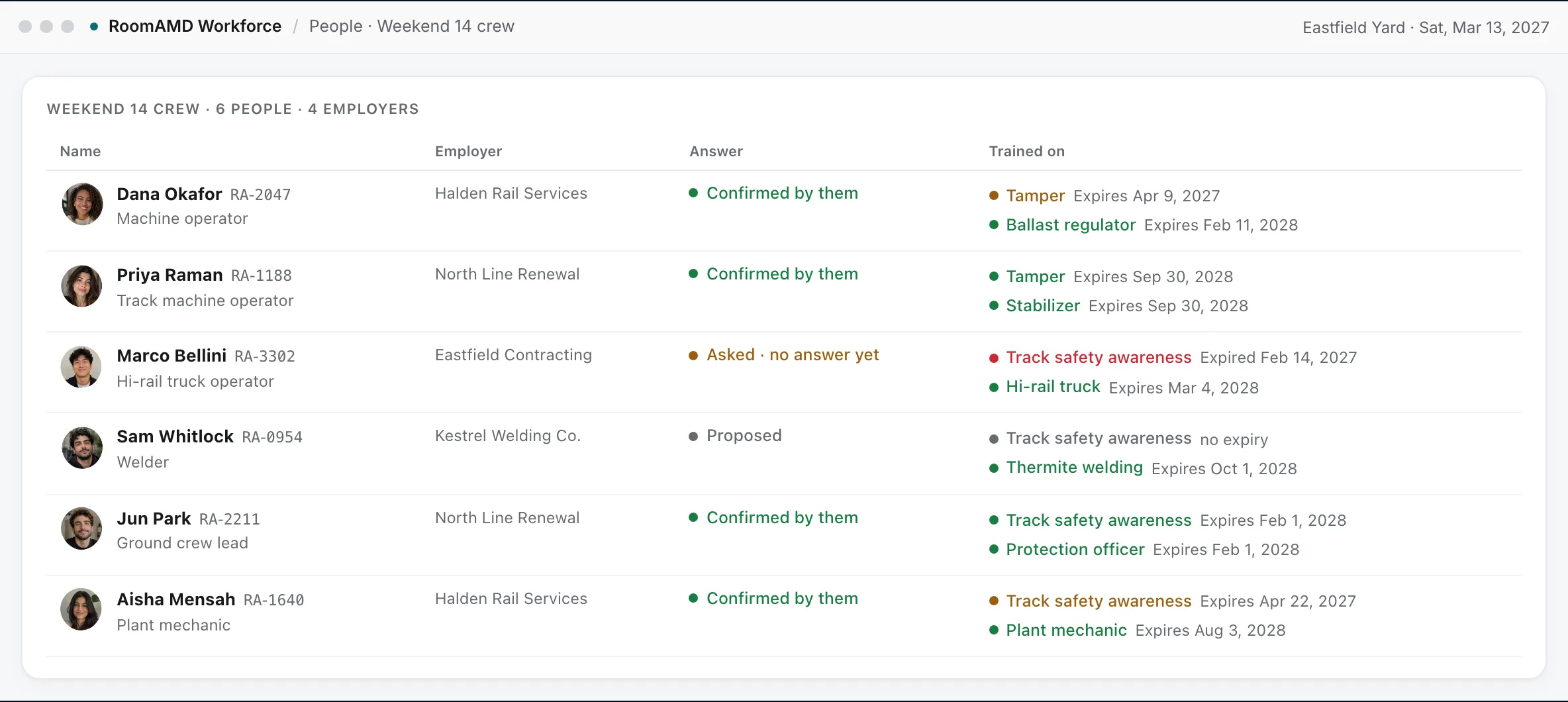
One crew list across every employer.
Everyone assigned to the job, from your own people to subcontractors, with the qualifications that matter shown beside each name.
One crew list across every employer.
Everyone assigned to the job, from your own people to subcontractors, with the qualifications that matter shown beside each name.
Assignments go out and come back answered.
Proposed, asked, confirmed by the person. No phone trail. The answer is recorded against the job, so the list is the truth.
Who is on site, right now.
Each card scanned at the gate marks the person on site, and the count follows. Anyone whose training has lapsed is turned away at the kiosk.
The people are ready. Now the equipment.
Explore RoomAMD WorkforceRoomAMD Fleet
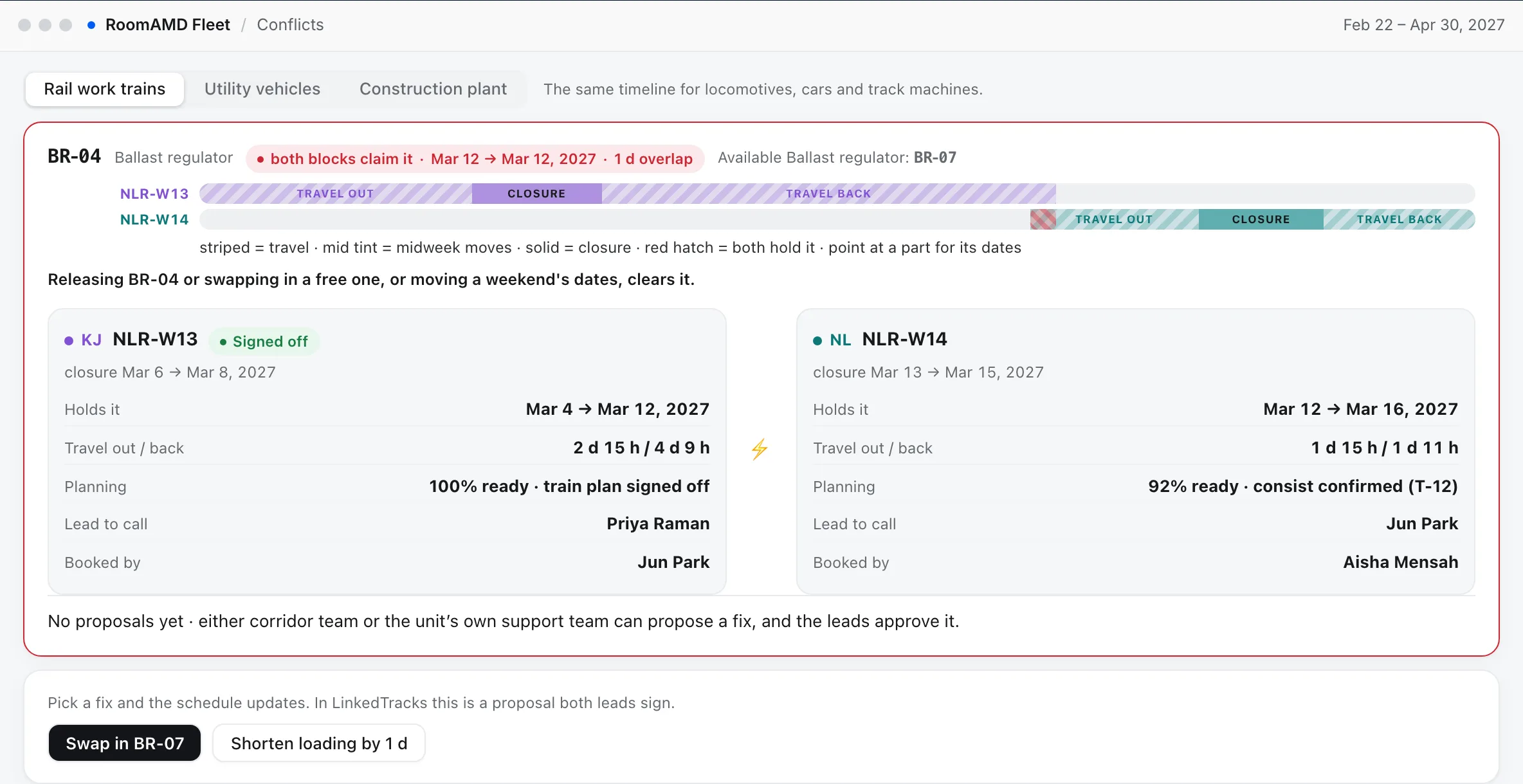
Every vehicle and machine on one timeline, with conflicts caught before they cost a day.
A register of your fleet, where each unit is, what it's booked for and when it's back. Bookings hold a unit from loading to return, so two jobs that want the same machine show up as a conflict, with the fix.
The register.
Every unit with its type, status, home and current bookings. Switch industries to see the same tool on rail, utility and construction fleets.
The register.
Every unit with its type, status, home and current bookings. Switch industries to see the same tool on rail, utility and construction fleets.
The timeline.
Each booking is drawn from the moment a unit leaves until it's back. Maintenance is booked like any other job, so it's never invisible.
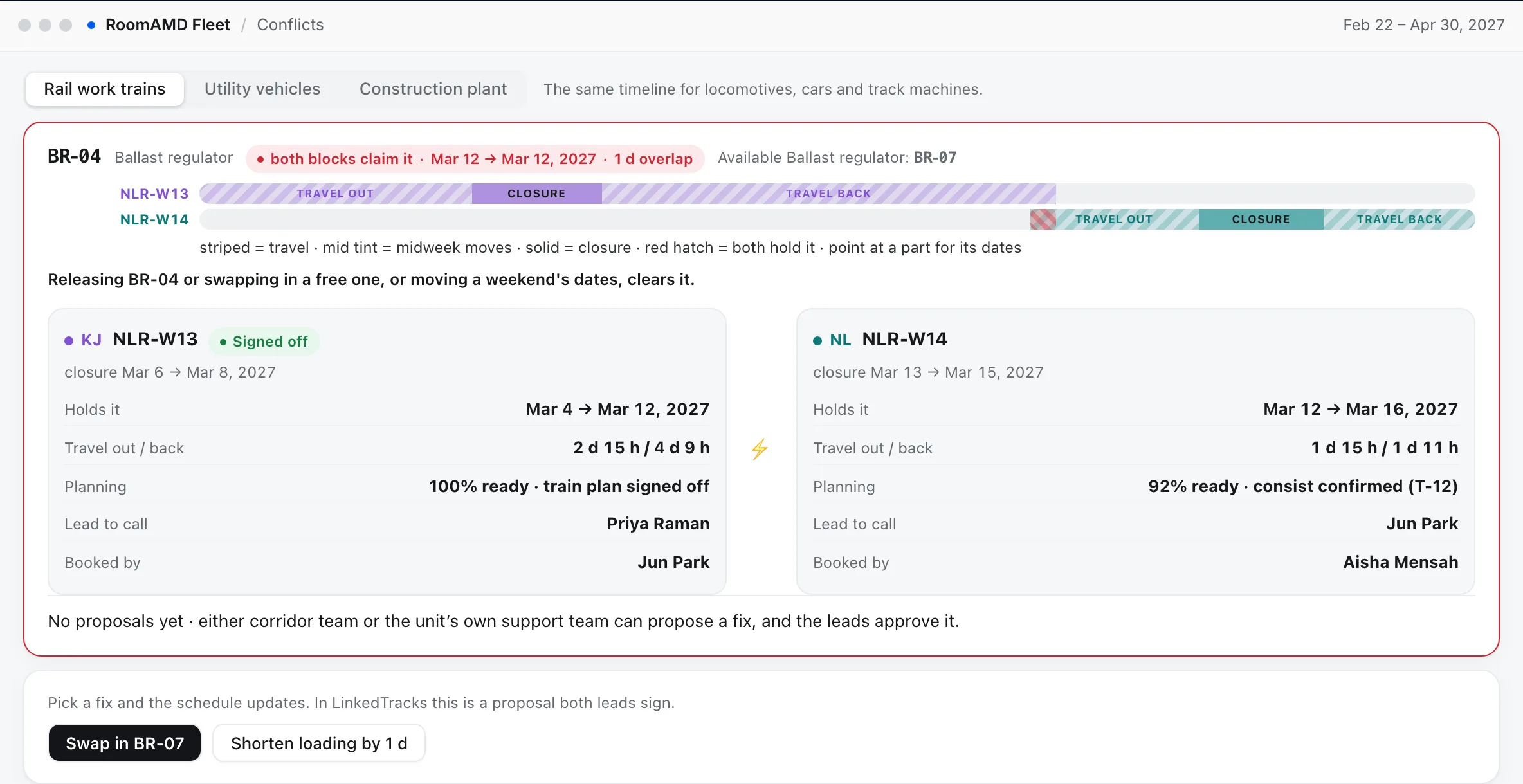
The conflict, and what clears it.
Two jobs claim the same unit. The system says why, offers a free unit, and books it in one step.
Equipment and people are booked. Is the project ready?
Explore RoomAMD FleetRoomAMD Projects
Project control from start to finish.
Milestones that complete when the facts say so, approvals tied to the exact version that was signed, and a lifecycle that shows what a delay touches. Document control tells you what was filed. Project control tells you whether the job is ready to go.
The lifecycle.
Every job runs against the same milestones, counted back from the work date. Each one completes on its own when its conditions are met.
The lifecycle.
Every job runs against the same milestones, counted back from the work date. Each one completes on its own when its conditions are met.
Approvals that know what they signed.
Two leads sign version 2. A machine is swapped. The package becomes version 3, and both signatures are back in review until each lead approves again.
What a delay touches.
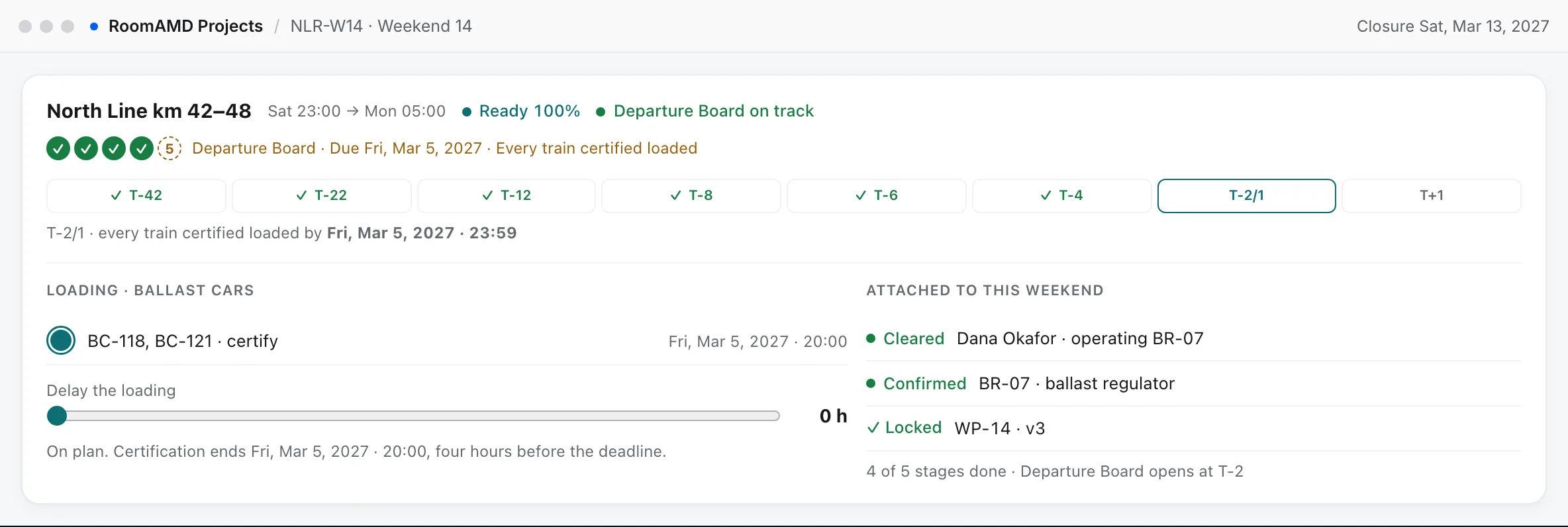
Slip the loading by half a day and the certificate misses its deadline, the milestone turns red and readiness drops, before anyone has to ask.
Now put the four together.
Explore RoomAMD ProjectsOne platform
Four products. One set of records.
The same worker, machine and approval ran through every section because they were never in separate systems. Assemble them around one workflow and they become a platform.
Identity
Workforce
Fleet
Projects
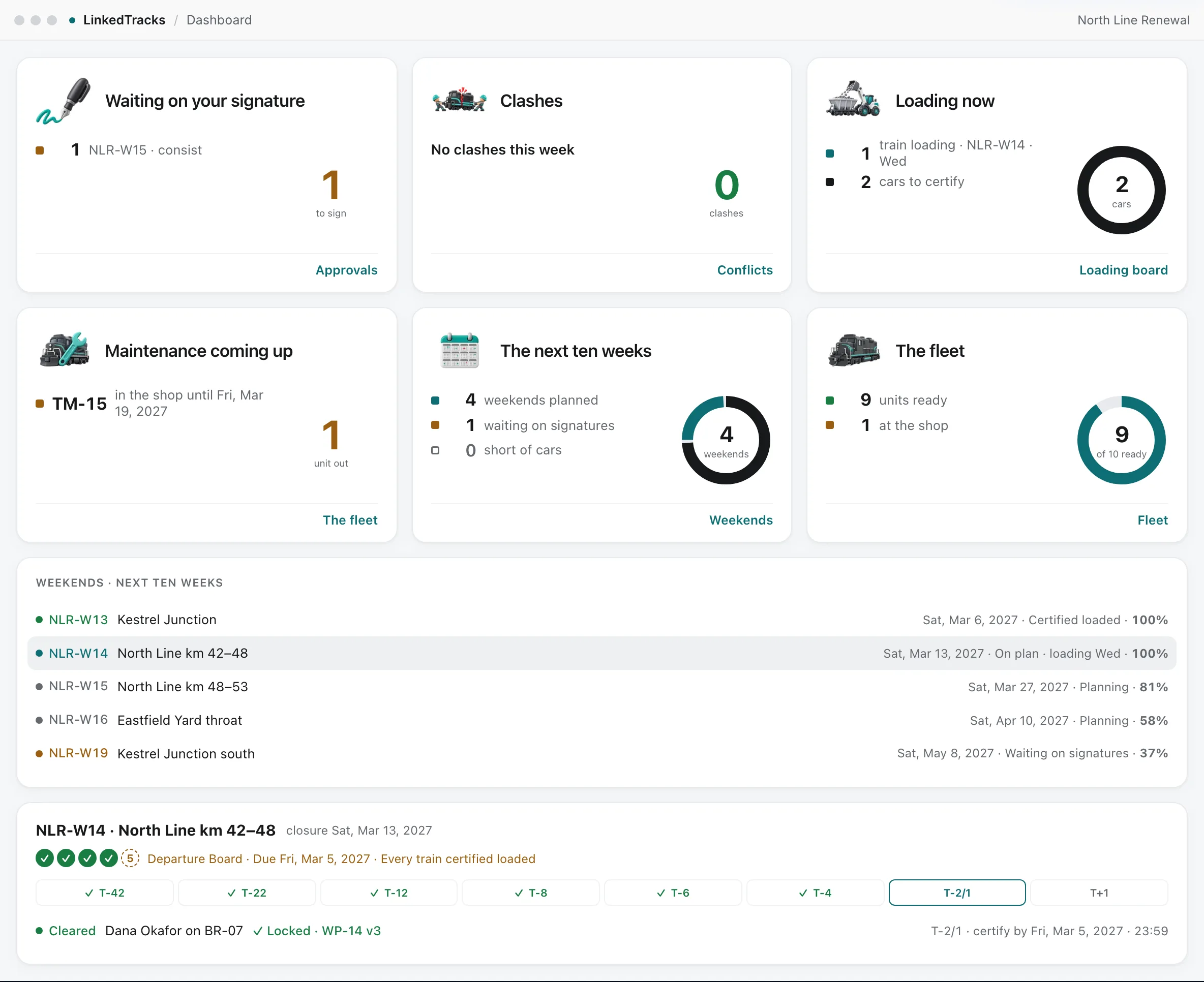
LinkedTracksone platform
Case 01
LinkedTracks
Our rail platform, from planning to execution.
Work-train planning for rail construction: identity, workforce, fleet and project control around the T‑42 lifecycle, from first draft to closeout.
Built around one organisation's real work-train process. The four products above were developed within it.
Built by RoomAMDOne organisation's process
Build something like this


Weekends · next ten weeks
- T-42
- T-22
- T-12
- T-8
- T-6
- T-4
- T-2/1
- T+1
The real application's dashboard, weekend list and lifecycle, on invented data. LinkedTracks plans, coordinates and documents. It doesn't control dispatch, signalling, train movement or machinery.
Explore LinkedTracksNot rail? Start with the parts you need.
Pick capabilities in the Platform Builder and see how they connect before you talk to anyone.
Beyond rail
Built for rail. Ready for the way you operate.
Any operation that sends people and equipment to planned work has the same shape: qualifications to check, assets to share, approvals to keep honest, deadlines that matter. The products are the same; the configuration changes.
Work‑train planning, from first draft to closeout.
Weekend closures planned end to end: consists, track machines, operators, routing, materials and readiness certificates, each tracked against the T‑week milestones.
BuiltLinkedTracks is our platform for work‑train planning.
Closure planning
Build each closure as a work block with trains, machines and crews, tracked against T-week milestones.
Projects
Fleet allocation
Allocate locomotives, cars and track machines across closures and resolve clashes before loading.
Fleet
Operator competencies
Book only qualified operators and verify their cards at the yard.
IdentityWorkforce
Readiness approvals
Sign consists, routing and materials by version, and certify every car before departure.
Projects
Engineering
Designed for operational responsibility.
Built on Next.js, React, React Native, Supabase and PostgreSQL, deployed on Vercel, with continuous integration on every change.
Core application infrastructure is hosted in Canadian regions. Some service providers, such as email delivery and push notifications, process data outside Canada.
Your data
- Structured recordsPeople, assets, bookings and approvals are typed records in PostgreSQL, not documents in a folder.
- Row-level securityEnabled on every table. All data access goes through the server, never straight from the browser.
- Private file storageDocuments and photos sit in private storage and open through short-lived signed links.
Who can do what
- Role-based permissionsRoles and scopes decide who sees and changes what. Every write is checked against them, and CI checks that every write is guarded.
- Audit historyThe database records field-level changes: what changed, from what, to what, by whom and when.
- Version-aware workflowsApprovals are tied to the exact version signed. Change it, and it needs signing again.
- Multi-company accessPeople from several organisations work in one programme, each seeing what their role allows.
How it's delivered
- Mobile appsA companion app for field crews: cards, scans, checks and photos where the work happens.
- Automated testingHundreds of unit tests run on every change, alongside scripted browser and mobile walkthroughs.
Case 02
A booking platform we built as our own.
Listings, request-to-book with a card hold, itemised pricing, split payouts and an admin console, built end to end and tested on demonstration data.
Built by RoomAMDOur own product
Build something like this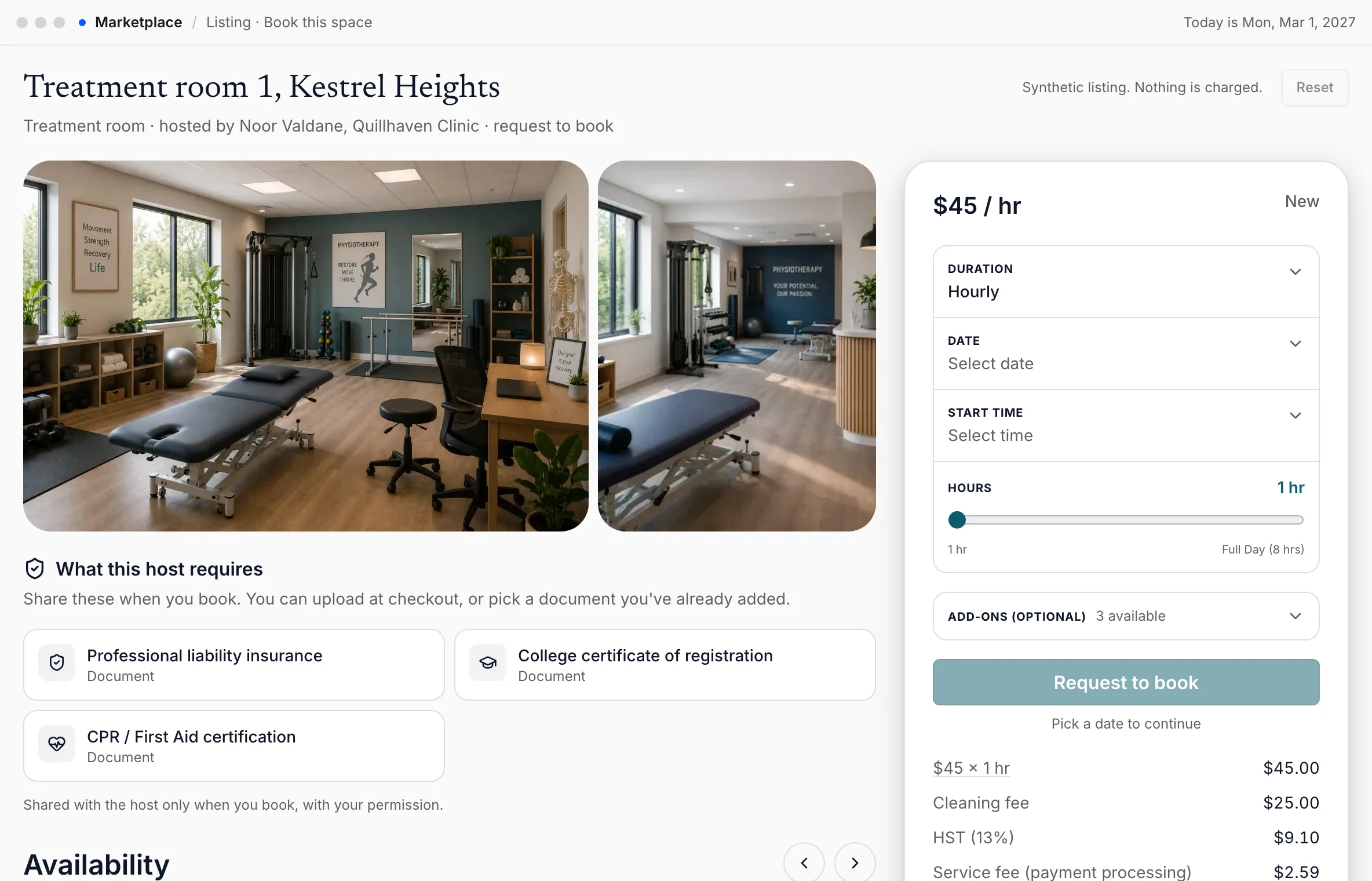
How we work
Six steps from the first conversation to working software.
Every project follows the same sequence, whether it starts from a blank page or from parts we have already built. You see working software early, and nothing goes live until the people who will use it have used it.
- 01
Discover
We learn how the work actually happens: the people, the handoffs, the spreadsheets and the exceptions.
- 02
Design
We design the screens and the rules together with the people who'll use them, before anything is built.
- 03
Build
We build in short, visible increments on a well‑supported stack, with tests from the first week.
- 04
Integrate
We connect to the systems you already run, so information is entered once.
- 05
Deploy
We launch on secure, monitored infrastructure, with web and mobile where you need them.
- 06
Improve
We keep refining as your operation changes, because requirements always do.
There is always room to grow.
Tell us what you need built, or what your team does today and where it hurts. We'll come back with what we'd build and how.